Monday, 20 January 2014

Robots with "soul"


What kind of robots does an animator / jazz musician / roboticist make? Playful, reactive, curious ones. Guy Hoffman shows demo film of his family of unusual robots -- including two musical bots that like to jam with humans. (Filmed at TEDxJaffa.)
Can robots and humans interact the way that human beings interact with each other? Guy Hoffman researches embodied cognition and intelligence in robots


Friday, 17 January 2014


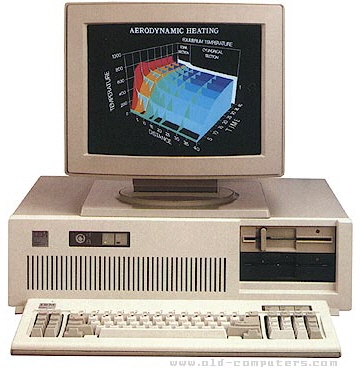
The Machine That Changed the World (1992) (broadcast under the alternative title "The Dream Machine" in the UK, with different narration) is a 5-episode television series on the history of electronic digital computers. It was written and directed by Nancy Linde, and produced by WGBH Television of Boston, Massachusetts, and the British Broadcasting Corporation. Backers included the Association for Computing Machinery, the National Science Foundation, and the UNISYS Corporation.
The first three episodes deal with the history of fully electronic general-purpose digital computers from the ENIAC through desktop microcomputers. The pre-history of such machines is examined in the first episode ("Giant Brains"), and includes a discussion of the contributions of Charles Babbage, Ada Lovelace, Alan Turing, and others. The fourth episode ("The Thinking Machine") explores the topic of artificial intelligence. The fifth episode ("The World at Your Fingertips") explores the then-newly-emerging worldwide networking of computers


Wednesday, 15 January 2014

Plastic surgery app game aimed at children taken down


Plastic Surgery home screen
Apple and Google have removed games from their app stores in which users performed cosmetic surgery.
Plastic Surgery for Barbie is no longer available on the App Store and Google Play has taken down its version, known only as Plastic Surgery.
The free game, which was labelled as suitable for children aged nine and over, involved making incisions with a scalpel and performing liposuction.
The description on Google described the overweight girl in the game as "ugly".
After performing a variety of procedures on the girl, she is revealed as a much thinner version of her former self and users can compare her body before and after the surgery.
Plastic Surgery for Barbara's face being operated onPlastic Surgery for Barbara is still available to download on the App Store
Although Apple has removed Plastic Surgery for Barbie, a game called Plastic Surgery for Barbara is still available on the App Store.
The graphics and premise are almost identical, although the app still available is listed as being suitable for people aged 12 and over.
In a statement, former British Association of Aesthetic Plastic Surgeons (Baaps) president Nigel Mercer described the Plastic Surgery for Barbie app as "sexist and disturbing".
He said: "This app blatantly and shamelessly uses child-friendly brand names [such as Barbie] to target young, vulnerable children and exposes them to sexist and disturbing rhetoric as the 'game' critiques the body of a cartoon character who does not conform to an unrealistic beauty standard.
Still from Plastic Surgery
"Even more shockingly, the app then encourages children to utilise surgery - going so far as to include images of syringes, scalpels and liposuction cannulas - to 'fix' the patient, who is described as an 'unfortunate girl'.
"That Apple or Google could condone this disgraceful app as a game suitable for children is no less than sickening.
"This app should not be available because it is not 'socially responsible'."
Mattel, which produces the children's doll and owns the Barbie brand, had already distanced itself from the app.
Google confirmed that it had taken down Plastic Surgery for Barbie.
A spokesman for the company said: "We don't comment on individual apps, but will remove apps that breach our guidelines."
Follow @BBCNewsbeat on Twitter

Robots test their own world wide web, dubbed RoboEarth (BBC NEWS)

Robot assistants will use the system to help patientsThe RoboEarth system will be tested in a hospital setting

Related Stories

A world wide web for robots to learn from each other and share information is being shown off for the first time.
Scientists behind RoboEarth will put it through its paces at Eindhoven University in a mocked-up hospital room.
Four robots will use the system to complete a series of tasks, including serving drinks to patients.
It is the culmination of a four-year project, funded by the European Union.
The eventual aim is that both robots and humans will be able to upload information to the cloud-based database, which would act as a kind of common brain for machines.
Common brain
The system has been developed by research scientists from Philips and five European universities including Eindhoven.
"At its core RoboEarth is a world wide web for robots: a giant network and database repository where robots can share information and learn from each other," said Rene van de Molengraft, the RoboEarth project leader.
The four robots selected to test the system in a public demonstration will "work collaboratively" to help patients, he told the BBC.
One robot will upload a map of the room so that others can find their way around it, others will attempt to serve drinks to patients.
"The problem right now is that robots are often developed specifically for one task," he said.
"Everyday changes that happen all the time in our environment make all the programmed actions unusable."
The aim of the system is to create a kind of ever-changing common brain for robots.
"A task like opening a box of pills can be shared on RoboEarth, so other robots can also do it without having to be programmed for that specific type of box," he added.
Home robots
The cloud-based system will also mean that some of the robot's computing or thinking tasks can be offloaded, meaning that a robot wouldn't need so much onboard computing or battery power.
Robot assistants are likely to be available in homes within 10 years, experts believe.
It is already possible to buy robot vacuum cleaners, robots that wash the windows and robot lawnmowers.
More humanoid robots, able to assist disabled or elderly people, are now being developed.
Author James Barrat, who has written extensively about the dangers of robots gaining their own intelligence, thinks there need to be safeguards.
"In the short term, RoboEarth adds security by building in a single point of failure for all participating robots," he said.
"In the longer term, watch out when any of the nodes can evolve or otherwise improve their own software. The consequences of sharing that capability with the central 'mind' should be explored before it happens."

Friday, 10 January 2014

CES 2014: Revising for exams 'while asleep' (BBC news)


Research into our memory patterns shows that memories that are evoked during deep sleep are more likely to stay in our minds for longer, and with greater accuracy.
Sheepdog Sciences, based in California, is seeking to use that theory to help people study.
An app logs what music or sound is being listened to while someone is learning new information. Then, at night, that audio is played back softly when a person is in deep sleep.
Sheepdog Sciences' Alex Butterwick says independent research has shown this to be a highly effective way of retaining information - meaning students can be revising for big exams, even if they are fast asleep.

Thursday, 9 January 2014

Vinyl Record Sales Increased 32% in 2013


Vinyl-record
In the midst of the growing adoption of music-streaming services such as Spotify and Pandora, vinyl records have made an unlikely comeback.
While CD sales declined 14.5% last year, vinyl sales grew 32% from 4.5 million units sold in 2012 to 6 million sold in 2013, according to Nielsen SoundScan. Even digital-music sales have taken a hit, as streaming becomes more popular: Overall album sales fell 8.4% last year.
Statista's chart, below, shows the rise of vinyl LP sales in the U.S. between 1993 and 2013.
2014_01_07_Vinyl


Image: Johannes Eisele/AFP/Getty Images